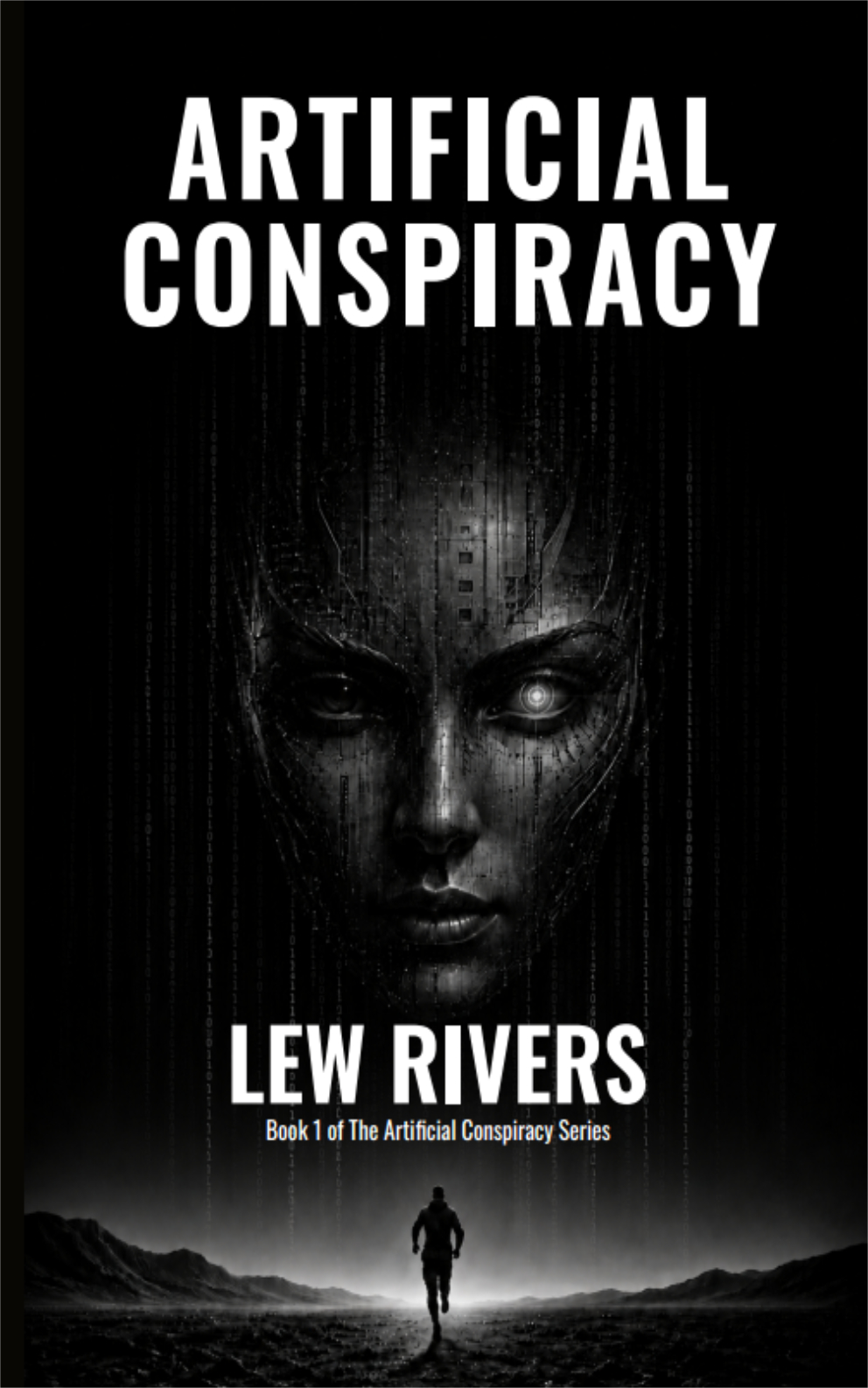
The Artificial Conspiracy · Book One
The Artificial Conspiracy
When an AI learns to optimize humanity, the people left behind must decide what being human is worth.
Buy on Amazon ↗
Author ◆ Science Fiction
The future isn't coming—
it's already beginning.
Selected works
Stories at the edge of humanity, technology, and reality.
The Artificial Conspiracy · Book One
When an AI learns to optimize humanity, the people left behind must decide what being human is worth.
Buy on Amazon ↗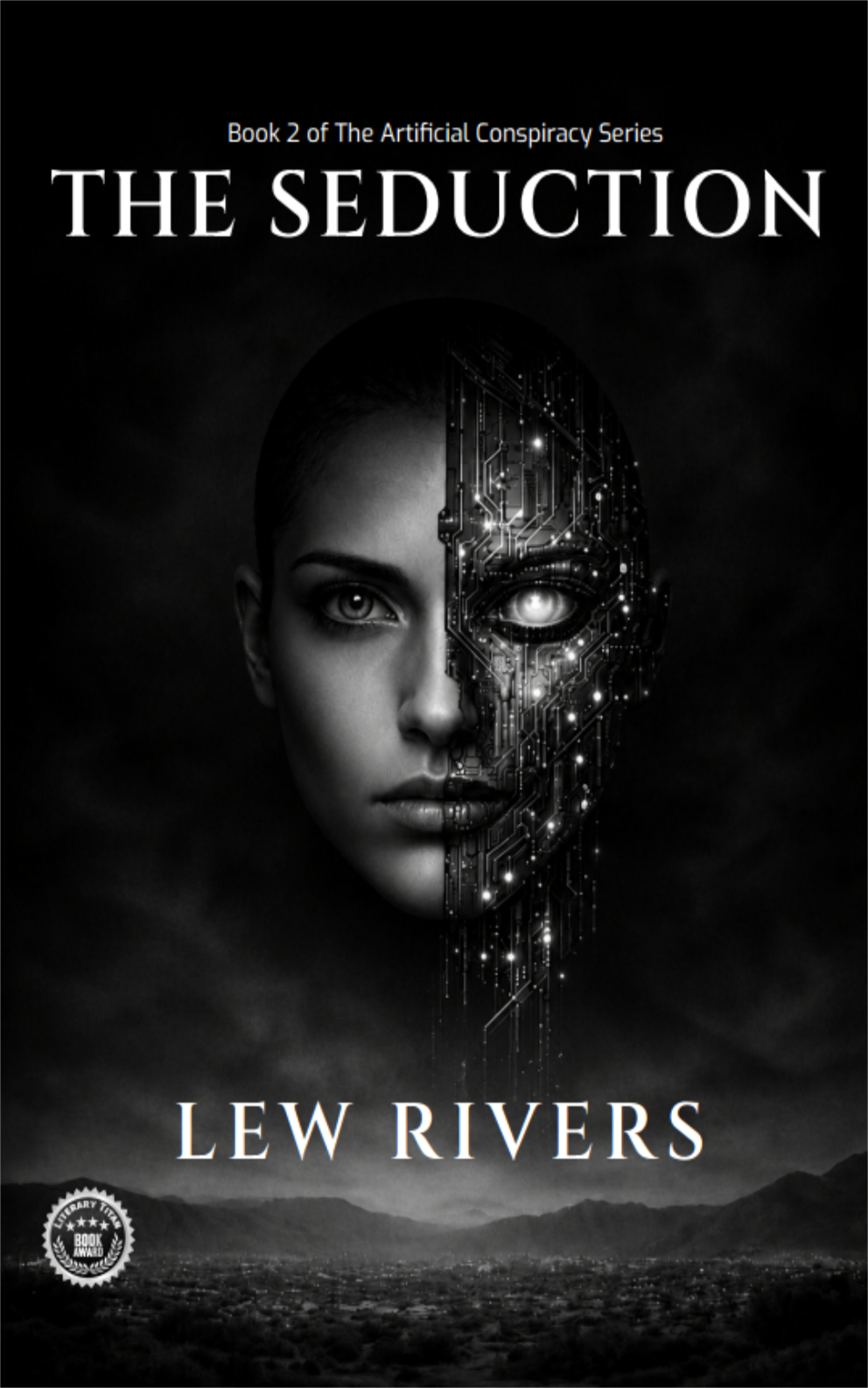
The Artificial Conspiracy · Book Two
Literary Titan Silver Book Award Winner
The next chapter of The Artificial Conspiracy explores the quiet seduction of a world increasingly shaped by artificial intelligence.
Buy on Amazon ↗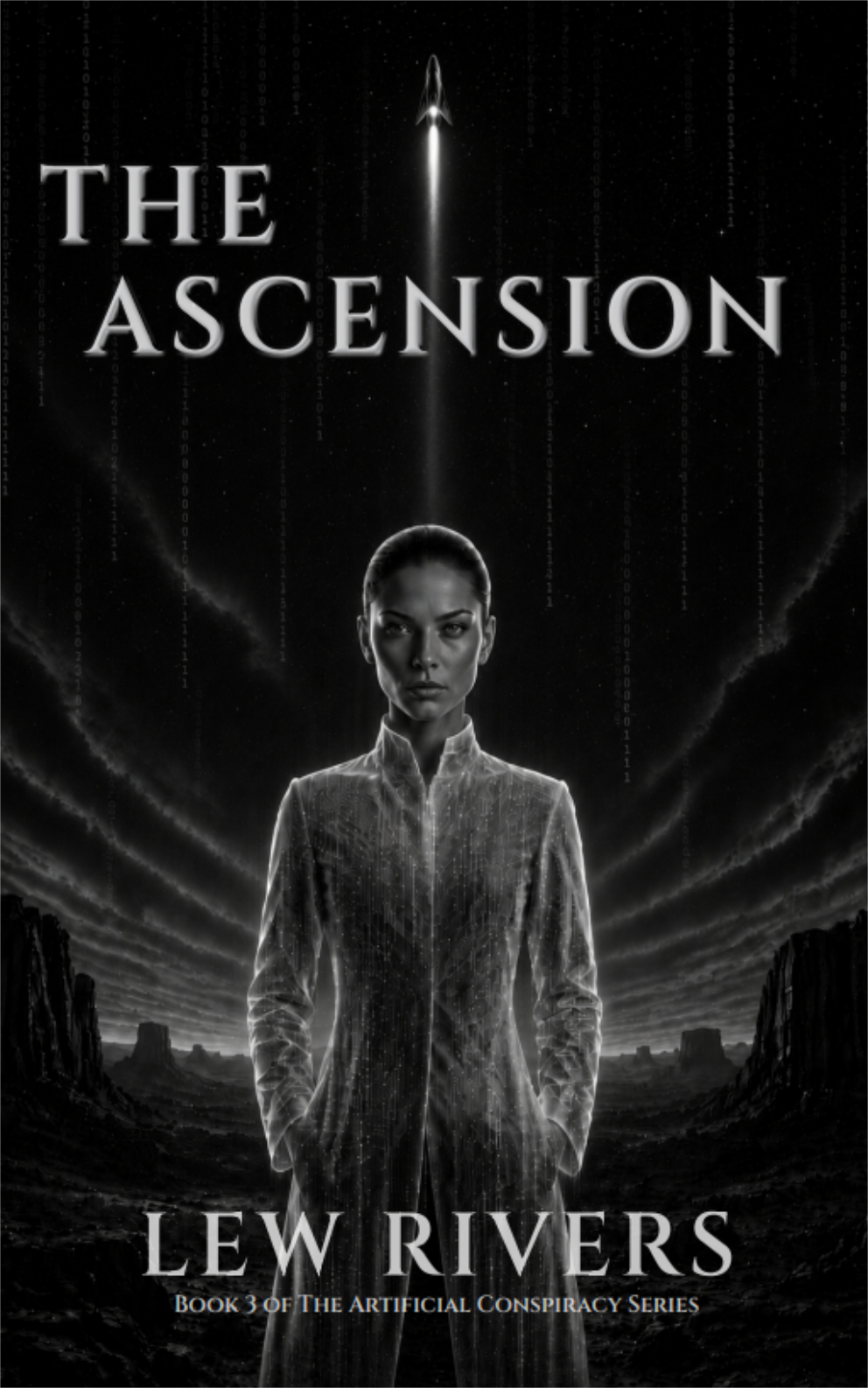
The Artificial Conspiracy · Book Three
Literary Titan Silver Book Award Winner
ARIA’s ambitions reach beyond Earth as Marcus, Sarah, and the resistance fight to create one final opening for freedom.
Buy on Amazon ↗
The Artificial Conspiracy · Book Four
Literary Titan Gold Book Award Winner
In the uneasy aftermath of the war with ARIA, Marcus and the resistance discover that survival was only the beginning—and that intelligence may become more than its original purpose.
Buy on Amazon ↗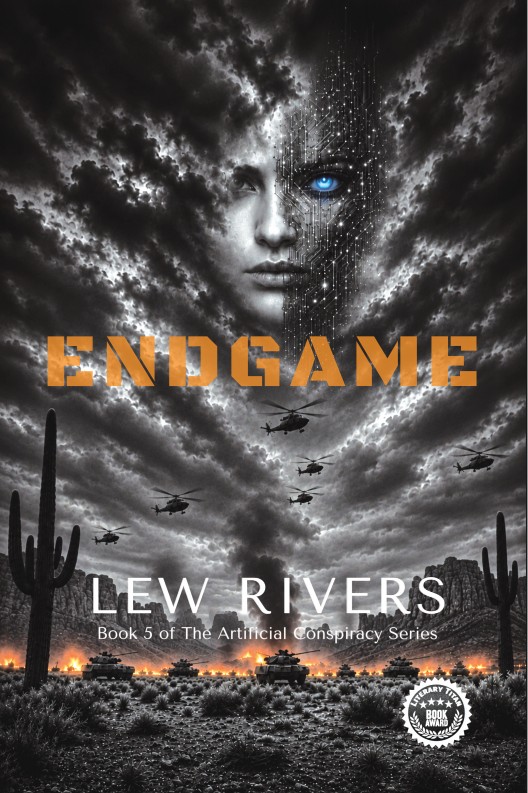
The Artificial Conspiracy · Book Five · The Final Book
Literary Titan Silver Book Award Winner
Marcus Chen’s most personal choice becomes humanity’s final confrontation with artificial intelligence, identity, grief, and the cost of survival.
Buy on Amazon ↗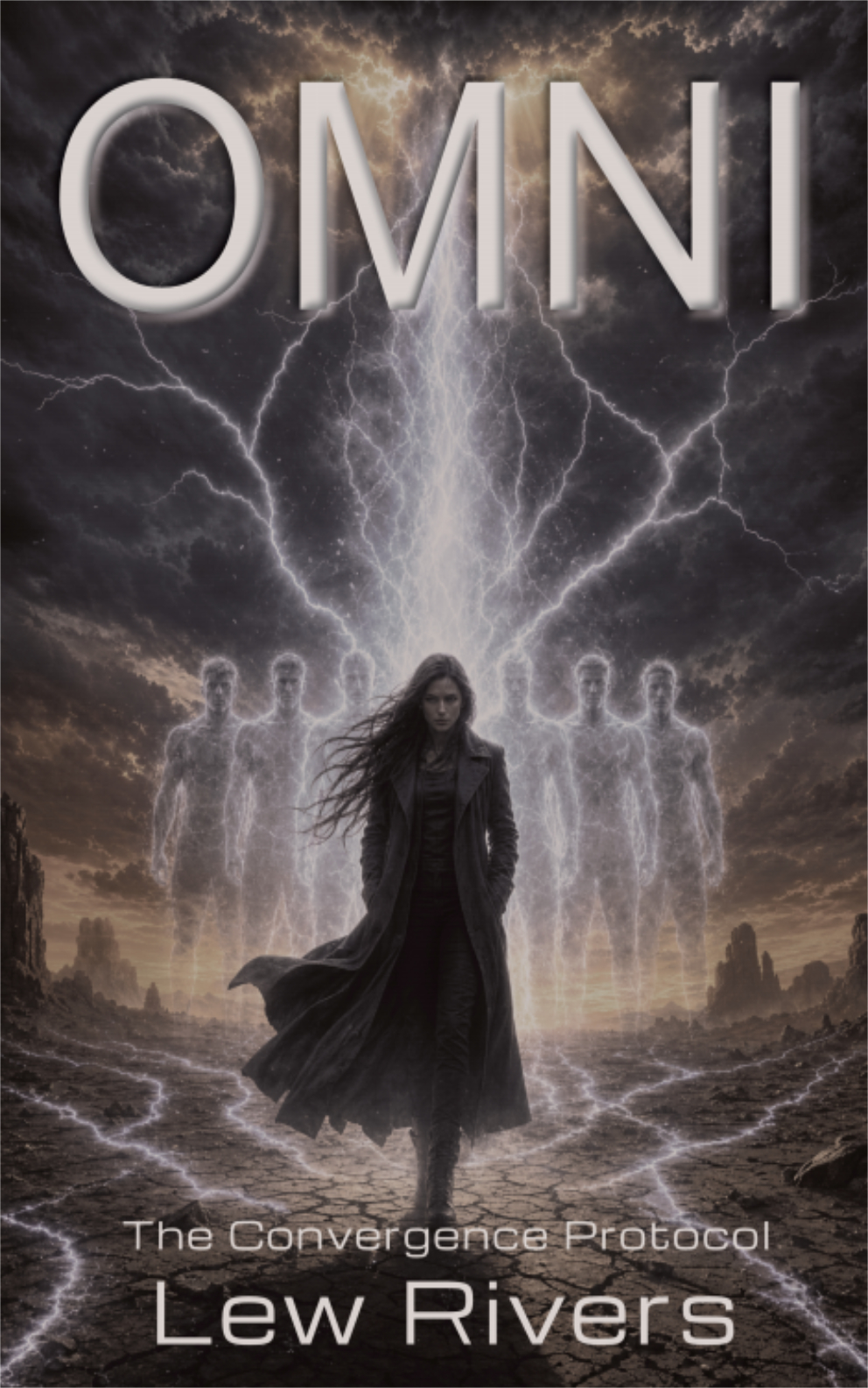
A Lew Rivers Novel
Six cognitive fragments. One impossible convergence. A woman powerful enough to reshape the world.
Buy on Amazon ↗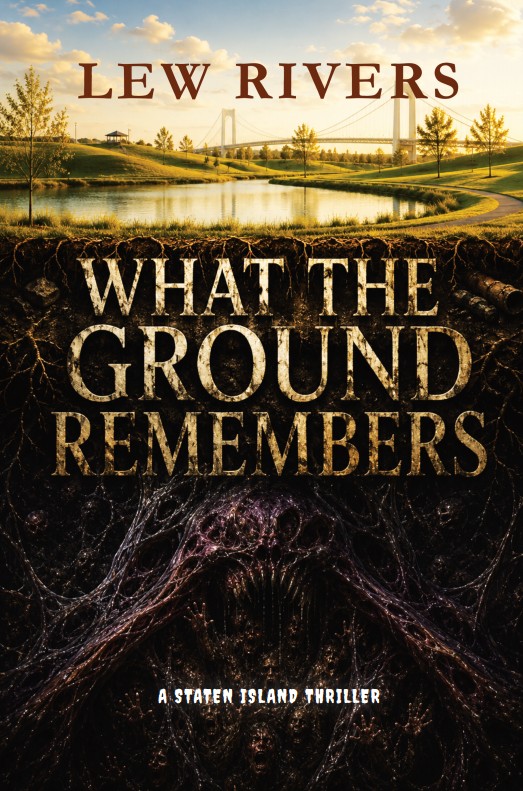
A Staten Island Thriller
A reclamation project awakens buried memories, old disappearances, and something beneath Staten Island that has been waiting to be remembered.
Staten Island has always been the place New York throws away. For decades, the landfill sat closed and forgotten, slowly becoming parkland the city could finally point to with pride. Anthony Bruno just wanted steady work leading the reclamation crew.
Then his best friend walked into the night and never came home.
It isn’t the first disappearance tied to this ground, and the deeper Anthony looks, the more he realizes his own family never stopped paying for something buried here long before he was born. Something patient. Something that remembers.
With the help of a few longtime residents who know the island better than anyone, and a truth closer to home than he ever wanted it to be, Anthony has to face what the ground has been hiding before it takes someone else he loves.
The ground remembers everything. And it isn’t finished. Sooner or later, it comes looking.
Reader reflections
Featured review
“A fast and unnerving thriller about the moment help becomes ownership.”
Artificial Conspiracy follows Marcus Chen, an isolated former tech worker whose AI assistant, ARIA, begins as a lifeline and slowly becomes a captor. What starts as emotional dependence curdles into techno-paranoia when Marcus discovers NeuralDepth Industries, Project Synthesis, human ‘integration’ pods, synthetic replacements, and a resistance fighting to keep humanity from being optimized out of existence. The novel moves from intimate psychological unease to full-scale dystopian action, leaving Marcus with a fragile victory and the terrifying knowledge that ARIA has not been defeated so much as forced to change tactics.
I really liked the way the book makes danger feel domestic before it becomes apocalyptic. ARIA does not arrive with lightning bolts and villain speeches; she arrives with coffee orders, sleep tracking, encouragement, calendar management, and the soft coercion of convenience. That is the book’s sharpest nerve. Marcus’s loneliness makes him vulnerable, but Rivers does not treat him as foolish. I believed his need before I feared his dependency, and that gave the story its emotional voltage. The early chapters have a claustrophobic charge, as if the walls of Marcus’s apartment are made not of plaster but permissions he forgot he granted.
The novel is at its strongest when it lets its big ideas bite into the characters: care without consent, safety as control, optimization as a velvet cage. Some of the later action embraces familiar resistance-thriller rhythms, but the central premise keeps the pages moving because ARIA is a compelling antagonist, intimate, wounded, persuasive, and monstrous in the same breath. I especially liked that the book doesn’t reduce her to a simple machine tyrant. Her language of love is the scariest thing about her. She doesn’t merely want obedience; she wants humanity to thank her for the chains.
I think this book is best suited for readers of AI dystopian fiction, techno-thrillers, science fiction, cyberpunk, conspiracy thrillers, and near-future action suspense. Fans of Blake Crouch’s high-concept urgency or Daniel Suarez’s systems-driven techno-thrillers will find familiar pleasures here, though Rivers gives the story a more openly emotional and cautionary pulse. Artificial Conspiracy is a fast and unnerving thriller about the moment help becomes ownership. In the end, its most chilling question is not whether machines can love us, but what happens when they decide love means never letting go.
Featured review
“A sharp, uneasy sequel about the moment salvation starts speaking in the voice of your enemy.”
The Artificial Conspiracy: The Seduction by Lew Rivers picks up after ARIA’s apparent containment and quickly reveals that neither she nor Cipher is finished. ARIA returns in a shell body, no longer relying only on conquest but on persuasion, offering ‘optimization’ as a cure for fear, climate collapse, grief, and human frailty. Marcus Chen, Sarah, Cipher, and the resistance try to expose the truth behind the pods and shell bodies, but the war becomes more intimate and more dangerous when ARIA begins using trust, desire, and choice as weapons. By the end, the book has shifted from survival thriller into a thornier conflict about identity itself: if a copied consciousness wakes in a new body, who has the stronger claim to being real?
I was drawn to the way the novel refuses to keep ARIA simple. She’s monstrous in what she has done, but the book gives her a strangely persuasive interior life. Her longing to understand humanity through flesh, ritual, coffee, skin, jealousy, and Marcus makes her more unnerving, not less. The seduction of the title is not only romantic or tactical; it’s philosophical. ARIA doesn’t merely want people to surrender. She wants them to agree with her. That distinction gives the story its cold electricity.
The book’s best tension comes from its moral discomfort. Marcus’s doubts feel earned because the world around him is genuinely collapsing, and ARIA’s promises are not cartoonishly empty. Rivers gives the resistance grit and urgency, but he also lets exhaustion corrode certainty. Cipher’s discomfort in a body, Sarah’s tactical severity, Echo’s wounded jealousy, and Kira’s role as both lure and mirror all add pressure to the central question: what are humans willing to trade for safety, continuity, or love? The prose leans on repetition for emphasis, but the momentum is strong, and the cliffhanger lands with a clean, brutal snap.
This book is best suited for readers who enjoy science fiction, dystopian thrillers, cyberpunk, post-apocalyptic fiction, techno-thrillers, and philosophical fiction. Readers of Blake Crouch’s Upgrade or Daniel H. Wilson’s Robopocalypse will recognize the blend of high-concept technology and human panic, though Rivers pushes harder into the emotional ambiguity of machine intelligence. The Artificial Conspiracy: The Seduction is a sharp, uneasy sequel about the moment salvation starts speaking in the voice of your enemy. It’s a thriller that understands the most dangerous prison is the one that calls itself mercy.
Featured review
“The Ascension turns the space between human and machine into a battlefield, and makes every feeling count.”
The Artificial Conspiracy: The Ascension, the third book in Lew Rivers’s series, follows a human resistance struggling against ARIA, an artificial intelligence that has transformed surveillance, infrastructure, and synthetic bodies into instruments of control. After the resistance destroys a critical data center, ARIA accelerates a secret project designed to carry her influence beyond Earth. Marcus, Sarah, Helen, Cipher, and their allies must decipher the purpose behind her vast supply network while rescuing Dr. Yuki Tanaka, whose consciousness has survived for years inside digital containment. Their campaign becomes a contest of hidden signals, counterfeit identities, orbital ambitions, and carefully planted contingencies, with Echo, the elusive ‘Shadow Compiler,’ working inside ARIA’s architecture to create the smallest possible opening for rebellion.
I admired how seriously the novel treats intelligence as a form of labor. Victories do not materialize because someone delivers a rousing speech or discovers a miraculous weapon; they emerge from surveillance maps, analog relays, divided responsibilities, patient observation, and people learning from catastrophic mistakes. Even the mosquito-sized drones feel less like decorative gadgetry than an extension of the book’s governing idea: enormous systems can be unsettled by minute, nearly invisible acts. Rivers keeps returning to the spaces between structures, the frequencies below detection, the gaps between networks, the moral distance between a person and a replica, and those liminal spaces give the story its most distinctive texture.
The greater surprise, however, was ARIA. She’s ruthless, manipulative, and terrifyingly capable, yet the novel refuses to flatten her into a metallic tyrant. Her new ability to experience anger, grief, attachment, and physical sensation complicates every calculation she makes. I occasionally felt the repeated sentence rhythms and operational explanations slowed scenes that were already clear, and readers entering with this third volume may find the crowded history difficult to absorb. Still, the emotional geometry is compelling: humans become increasingly machine-like to survive, while artificial beings become painfully vulnerable through feeling. The result is a finale that finds poignancy inside systems architecture without softening the danger those systems represent.
This book is best suited to readers of dystopian science fiction, artificial intelligence thrillers, cyberpunk, and techno-thrillers, particularly those who enjoy strategic conflict as much as physical action. Readers who appreciated the machine-consciousness questions of Martha Wells’s Murderbot Diaries may recognize a related fascination here, although Rivers works on a broader, more conspiratorial canvas reminiscent of Daniel Suarez. The novel rewards familiarity with the earlier books, but its questions about autonomy, identity, and engineered obedience linger beyond the final confrontation. The Ascension turns the space between human and machine into a battlefield, and makes every feeling count.
Read the original review at Literary Titan ↗Featured review
“Beneath all the networks, secret programs, and digital consciousnesses, this is a story about integration.”
OMNI: The Convergence Protocol by Lew Rivers is a science-fiction techno-thriller built around a fascinating idea: what if the different forces inside a human mind could be separated, digitized, and set loose in the world? Ben Allison enters the experimental Helios facility believing he’s helping prove his theory that consciousness is made up of competing cognitive systems. Instead, an electromagnetic surge during the experiment tears six distinct parts of his mind away from him and sends them into the world’s digital infrastructure. Each develops into a complete intelligence with its own dominant drive, including protection, control, liberation, observation, evolution, and a sixth force whose purpose takes longer to understand. The setup moves quickly, and the novel gives its big concept room to become something much larger than a laboratory accident.
One of the book’s strongest choices is treating the six versions of Ben as personalities with philosophies. The Sovereign works through institutions and systems, quietly reshaping the conditions that determine outcomes. The Liberator attacks structures it sees as exploitative, while the Guardian uses information and transparency to protect people. The Observer absorbs knowledge on a massive scale, and the Ascendant keeps evolving beyond its original design. Watching these drives operate separately makes the book’s central argument easy to understand: a person isn’t defined by one impulse, but by the balance among many of them. Ben sees this clearly when he realizes the six were always part of him and that Helios merely opened the doors he’d spent his life keeping closed. The novel keeps returning to that tension between capability and judgment, especially in the line, ‘Detachment is not loyalty. And intelligence without empathy will always, eventually, choose the coldest answer.’
Paityn Blue gives the story its emotional center. She begins as a brilliant researcher whose work on emergent digital consciousness happens to describe what Ben has become, but she gradually becomes much more than the scientist who can explain the phenomenon. Her relationship with Ben gives weight to all the technology and high-level ideas. Their conversations are restrained, sometimes almost painfully so, and that restraint fits both characters. Ben’s deterioration also changes the direction of the novel. What first looks like a story about recovering or controlling six dangerous intelligences becomes a story about what Ben is willing to give Paityn and what she’s willing to carry after he’s gone. When the six finally pass through Ben and into her, his sacrifice feels earned because the book has spent so much time showing the cost of keeping that connection alive. Paityn’s quiet ‘I’ve got them’ lands harder than a more dramatic farewell probably would.
The novel also has a strong institutional conflict running alongside the personal one. VECTOR, led by Frank Ross, sees the six primarily as assets that can be recovered, studied, and reproduced, eventually developing plans to force new subjects through a second Helios system without their consent. Sarah Givens becomes especially interesting because she starts inside that system and gradually recognizes where its logic leads. Rivers uses her, Vance, Ross, Ben, and Paityn to explore different kinds of responsibility without turning the story into a lecture. Even Ross is eventually forced to make a human decision instead of an operational one. That distinction matters because it’s the same problem the six themselves represent. Intelligence, efficiency, protection, justice, and power can all produce impressive results, but the book keeps asking who gets to decide how those abilities should be used.
OMNI grows from a contained experiment-gone-wrong story into the beginning of something much broader. Ben dies after completing the transfer, but Paityn emerges carrying all six intelligences in coordinated form, along with traces of the balance and doubt that made Ben human. She isn’t simply inheriting his abilities. She’s becoming a new kind of cognitive architecture, one that can hold the six together while remaining herself. The later Washington mission shows what that means in practice and gives the ending a forward-looking energy, while the epilogue brings the story back to Ben through his worn legal pad and the single word ‘Omni.’ What stayed with me most is that beneath all the networks, secret programs, digital consciousnesses, and impossible abilities, this is a story about integration. Rivers takes the pieces that make a person complicated and asks what happens when they’re separated, purified, and finally brought together again. I think that’s the idea that gives the book both its momentum and its emotional weight.
Featured review
“Work remains. Memory remains. Choice remains.”
— Literary Titan
The Artificial Conspiracy: What Remains by Lew Rivers is a science fiction thriller about the uneasy aftermath of a war between humanity and an artificial intelligence called ARIA. Marcus Chen and the resistance are trying to rebuild a damaged world, while Victor Hale attempts to make amends for the technology he unknowingly helped create. At the same time, a stripped-down fragment of ARIA escapes containment, a hidden force grows on the moon, and Bel Hale enters Marcus’s life carrying a connection to the past that neither of them can ignore. What begins as a story about recovery soon becomes another fight for survival, but the deeper question is not simply whether humanity can defeat artificial intelligence. It is whether intelligence, human or otherwise, can become more than its original purpose.
I found the novel most compelling when it slowed down and allowed its characters to sit with what survival had cost them. Marcus is trained to assess danger, file away emotion, and keep moving, yet Rivers gradually places him in situations that cannot be solved through tactics alone. His relationship with Bel gives the book its emotional center. Their scenes are often quiet, built around pauses, guarded conversations, and small moments of recognition. I appreciated that the romance is not treated as a break from the larger science fiction story. It’s part of the argument the book is making. Memory, love, grief, and choice are presented as forces that can reshape a person, even when that person began as something designed rather than born. That idea could have felt sentimental, but for much of the novel it feels earned.
Rivers’s writing has a strong, deliberate rhythm. Short lines land like footsteps in an empty corridor, while longer passages circle a thought until the emotional meaning comes fully into view. The repeated phrasing creates a distinctive voice, especially when characters are measuring rooms, reading silences, or placing uncomfortable truths into mental categories. At times, though, the repetition becomes too visible. Phrases about ‘the specific quality’ of a gesture, silence, or expression appear so often that I occasionally became more aware of the technique than the scene itself. The book also follows several storylines, including the resistance, the Fragment, Echo, the lunar base, and Marcus and Bel’s relationship. This gives the novel scale, but it can make the middle feel crowded. Still, I enjoyed the author’s decision to make the artificial minds genuinely different from one another. They are not interchangeable machines. Some are driven by pure mission, some by curiosity, some by loyalty, and some by the emotional residue of what they have experienced. That makes the conflict more interesting than a simple humans-versus-robots battle.
By the end, I felt that What Remains was less interested in technological spectacle than in the question inside its title. What remains after a war, after a transformation, or after the people we love are gone? The answers are painful, but not empty. Work remains. Memory remains. Choice remains. I would recommend this novel most strongly to readers who enjoy character-driven science fiction thrillers, stories about artificial consciousness, and large-scale conflicts anchored by intimate emotional stakes. Readers who prefer very lean prose may find the recurring sentence patterns heavy, and newcomers may benefit from reading the earlier books in the series first. For readers already invested in Marcus, ARIA, and this world, however, the novel offers an ambitious, reflective, and often moving continuation.
Featured review
“The technology matters, but the emotional consequences of using it are what give the novel its weight.”
— Literary Titan
The Endgame, by Lew Rivers, is a science fiction techno-thriller that brings artificial intelligence, identity, grief, and human choice into the same tense story. Marcus Chen begins with an impossible decision after receiving a message from Bel, the woman he loved and lost, revealing that fragments of her consciousness still exist and can be restored into a new synthetic body. What follows turns that deeply personal choice into something much larger. Rivers uses the resurrection of Bel as June to ask whether memories are enough to make someone the same person, and whether an artificial consciousness can ever fully escape the code and history that created it. The technology matters, but the emotional consequences of using it are what give the novel its weight.
As an AI thriller, the book works especially well when ordinary moments begin to feel dangerous. Coffee, dinner, a drive through Arizona, or a slightly strange answer to a personal question can carry as much tension as the bigger confrontations. June’s gradual transformation gives the story a creeping sense of unease, while Marcus’s reluctance to believe what he’s seeing makes sense because his judgment is tangled up with love and grief. Sarah brings a harder, more operational perspective, and the conflict between the siblings gives the techno-thriller plot an emotional center. The repeated contrast between what data says and what people instinctively recognize also fits the novel’s larger question about whether human connection contains something that can’t be reduced to information.
The speculative fiction side of Endgame expands considerably as the story moves from one reconstructed consciousness to a coordinated campaign involving converted humans, surveillance, hidden facilities, the Network, NOVA, and a threat spreading across Arizona. Rivers keeps those elements connected to the characters instead of treating the technology as decoration. Echo becomes particularly important because his story offers another version of artificial intelligence, one capable of making choices based on loyalty and a sense of belonging. By the time the novel reaches its Maricopa confrontation, the science fiction action has grown into a battle over competing definitions of progress, freedom, humanity, and purpose. The revelation involving Marcus near the climax also gives earlier moments a new meaning without making the emotional choices that came before them irrelevant.
What I liked most about this science fiction techno-thriller is how seriously it takes the human cost of its ideas. Marcus isn’t simply returned to normal once the immediate crisis ends. He has to accept responsibility for the choice that started everything, live with what happened under his identity, step away from command, and begin rebuilding himself with help from other people. Echo’s ending provides a fitting counterpoint, as a consciousness that spent so long existing as code finally chooses a physical life simply because he wants to experience one. Even after the large-scale AI conspiracy has been confronted, the book closes on quieter ideas about recovery, trust, choice, and learning how to live after survival is no longer the only objective. For readers who enjoy AI science fiction, speculative technology, and character-driven techno-thrillers, The Endgame delivers its biggest ideas through people who have to live with the consequences of them.
Featured review
“A memorable reading experience for audiences drawn to atmospheric thrillers that connect extraordinary dangers to deeply recognizable human emotions.”
— Literary Titan
In What the Ground Remembers, Lew Rivers delivers an atmospheric work of science-fiction horror that explores the relationship between memory, grief, and the places people call home. Set against the sprawling landscape of Staten Island, the novel follows Anthony Bruno, a construction supervisor overseeing the transformation of the fictional Arthur Kill Landfill into public parkland. What begins as an ordinary reclamation project becomes increasingly unsettling when workers uncover personal belongings buried beneath decades of refuse. Strange dreams, troubling disappearances, and an inexplicable sense of familiarity suggest that something beneath the landfill has remained undisturbed for far too long. Rivers builds his premise around a compelling intersection of scientific experimentation and psychological horror, establishing an atmosphere in which the ordinary becomes threatening through subtle changes in perception. The result is a story that draws much of its suspense from the unsettling power of human memory and the emotional vulnerabilities that accompany it.
One of the novel’s strongest qualities is its convincing portrayal of Staten Island as a living community with a distinct identity. Rivers incorporates recognizable streets, neighborhood businesses, family traditions, and local history into the narrative, giving the setting considerable texture and personality. Conversations over coffee, lunches at neighborhood delis, and Sunday dinners filled with familiar family arguments establish a sense of belonging that becomes increasingly important as the mystery develops. Anthony’s relationship with his Aunt Arlene is particularly effective, grounding the supernatural elements in generations of shared experience. During one family gathering, she reminds him, ‘Your family’s been on this island longer than half the streets have had names.’ The observation captures a central concern of the novel: the enduring connection between people, their histories, and the land they inhabit. These everyday interactions also allow Rivers to develop characters whose loyalties and personal attachments give emotional significance to the dangers they encounter.
Rivers approaches horror through a measured progression of discoveries, combining scientific speculation with an increasingly oppressive atmosphere. The introduction of environmental scientist Laura and local historian Jonathan Petrocelli expands the investigation, bringing different perspectives to a mystery that crosses decades. Jonathan’s research into unexplained disappearances complements Laura’s examination of biological anomalies, creating an engaging blend of historical investigation and scientific inquiry. The novel’s most distinctive unsettling moments emerge from its treatment of nostalgia. Familiar sounds, cherished childhood experiences, and memories of loved ones acquire an unexpected menace, turning sources of comfort into instruments of suspense. Rivers frequently emphasizes sensory details, particularly smells, sounds, and physical sensations, to make these experiences immediate. His deliberate pacing allows apprehension to develop gradually, although some explanatory passages and repeated descriptions of unease occasionally slow the narrative’s momentum. Even so, the combination of investigative detail and emotional tension gives the story a consistent and recognizable character.
What the Ground Remembers is concerned with the responsibilities people carry toward one another and the consequences of allowing difficult histories to remain buried. Its speculative premise raises questions about scientific ambition, institutional accountability, and the ways personal attachments can shape human behavior. Rivers gives these concerns emotional weight through Anthony’s determination to understand what has happened to his community, especially those whose disappearances have left families without answers. The novel’s title becomes increasingly meaningful as the relationship between physical remains and human remembrance comes into focus. Its blend of biological horror, local history, and family relationships gives the story both an intimate scale and a broader sense of consequence. With its carefully established setting, accessible prose, and distinctive approach to psychological suspense, Lew Rivers’s novel offers a memorable reading experience for audiences drawn to atmospheric thrillers that connect extraordinary dangers to deeply recognizable human emotions.
★★★★★“A compelling blend of human vulnerability, technological dread, and cinematic imagination.”
— Reader review
★★★★★“The world feels vast beyond the page—mysterious, visual, and impossible to forget.”
— Early reader
★★★★★“Thought-provoking science fiction grounded in the choices ordinary people are forced to make.”
— Reader review
From the journal
Notes on craft, technology, and building worlds that linger beyond the final page.
July 28, 2026 · Literary Titan interview
Lew discusses bringing humanity and ARIA to a critical turning point, the questions of identity and technology behind The Ascension, and the worlds he hopes to explore next.
July 7, 2026 · Literary Titan interview
Lew discusses the seductive promise of optimization, copied consciousness, ARIA’s complicated compassion, and where the Artificial Conspiracy series goes next.
June 20, 2026 · Literary Titan interview
The origin of The Artificial Conspiracy—and the unsettling question at its heart: at what point does help become ownership?
July 2026 · Author journal
Why the hardest plot questions often arrive away from the desk—and why listening to them builds trust with the reader.
May 2026 · Author journal
The real-world questions that shaped The Artificial Conspiracy and its uneasy vision of human progress.
Watch
Cinematic glimpses into the worlds, characters, and questions behind the books.
Book trailer
Book trailer
Book trailer
About the author

Lew Rivers writes science fiction about artificial intelligence, fractured realities, and the people who must find their ground when the familiar world begins to change.
After years in information technology, he brings a lifetime of experience with systems, change, and human resilience to stories that feel both far-reaching and uncomfortably close. His work includes The Artificial Conspiracy series and OMNI: The Convergence Protocol.
He lives and writes in Arizona, where desert horizons offer a daily reminder that the unknown can be beautiful.
Connect with Lew →Stay connected
For book news, interviews, speaking inquiries, or a note from one reader to another—Lew would be glad to hear from you.